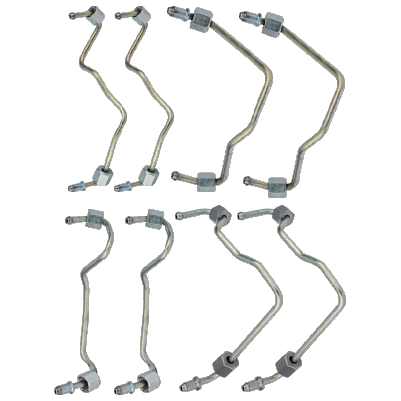
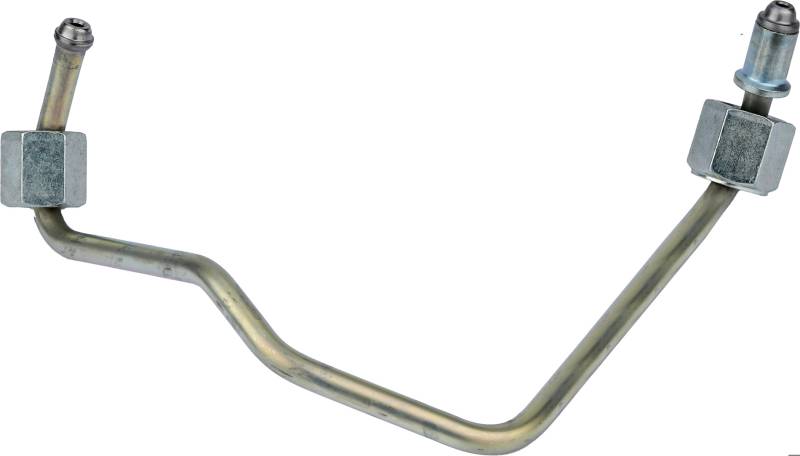
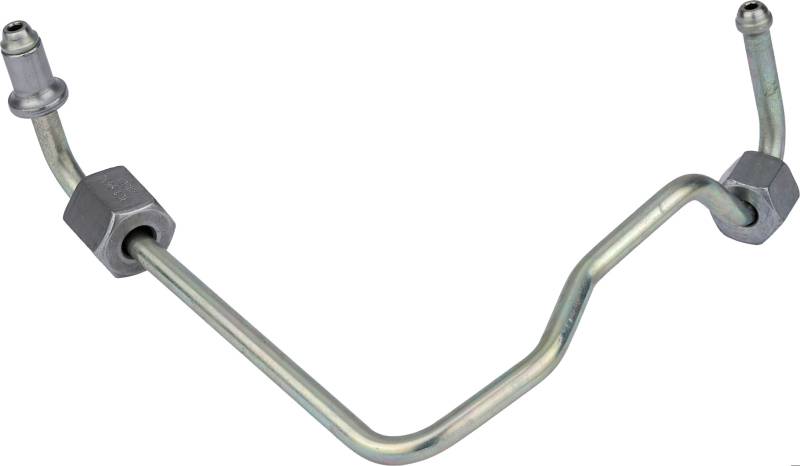
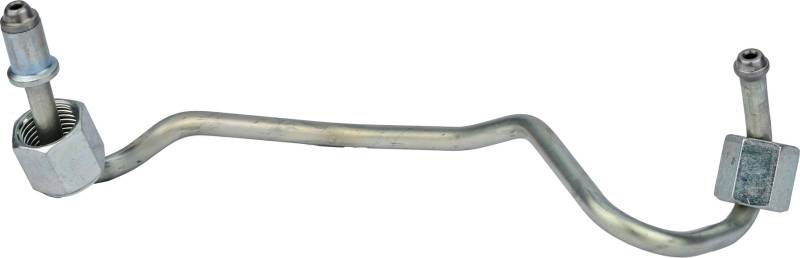
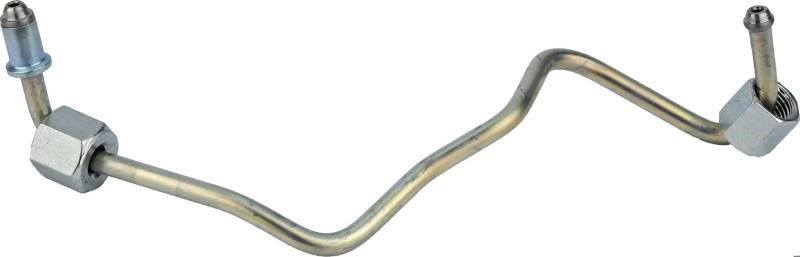
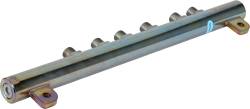
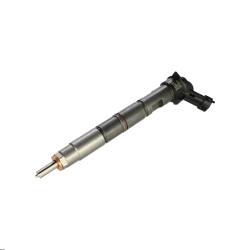
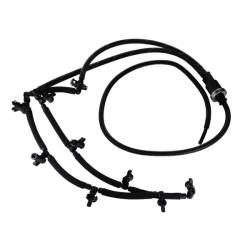
Fits 2011-2016 GM 6.6L LML Duramax
Kit Contains:
(2) Cylinders 1 and 8 (GM Cross Reference Part # 12670468)
(2) Cylinders 2 and 7 (GM Cross Reference Part # 12670460)
(2) Cylinders 3 and 6 (GM Cross Reference Part # 12670469)
(2) Cylinders 4 and 5 (GM Cross Reference Part # 12670471)
The high pressure fuel injector lines on your 2011-2016 GM 6.6L LML Duramax are critical pathways that deliver diesel fuel from the common rail to each cylinder at pressures exceeding 30,000 PSI. When these lines fail, corrode, or become contaminated, they can compromise injector performance, cause fuel leaks, trigger check engine lights, and in severe cases, contribute to catastrophic CP4 pump failure scenarios. The NorCal Diesel Performance High Pressure Injector Line Kit provides a complete, precision-engineered replacement solution that restores fuel system integrity while meeting or exceeding OEM specifications.
This comprehensive guide explores everything LML Duramax owners need to know about high pressure injector lines: common failure modes, diagnostic strategies, replacement procedures, the critical importance of replacing all lines during major fuel system repairs, and why choosing quality aftermarket components like the NorCal Diesel Performance kit delivers superior long-term value compared to reusing corroded factory lines or purchasing individual OEM replacements.
The 2011-2016 6.6L LML Duramax employs a Bosch CP4.2 high pressure common rail fuel injection system that operates at maximum pressures of 30,000 PSI (2,000 bar). This advanced system uses eight individual high pressure steel lines to deliver precisely metered fuel from the common fuel rails to piezoelectric injectors at each cylinder. These injector feed lines are precision-formed steel tubes with specialized fittings that must seal perfectly under extreme pressure while withstanding constant vibration, thermal cycling, and exposure to diesel fuel.
The LML Duramax cylinder layout positions cylinders 1, 3, 5, and 7 on the passenger side bank and cylinders 2, 4, 6, and 8 on the driver side bank, following a firing order of 1-2-7-8-4-5-6-3. The NorCal Diesel Performance kit includes all eight lines configured in four matched pairs:
Cylinders 1 and 8 (GM Part # 12670468): Longest lines connecting outer cylinders
Cylinders 2 and 7 (GM Part # 12670460): Driver side outer and passenger side inner
Cylinders 3 and 6 (GM Part # 12670469): Inner cylinders on opposite banks
Cylinders 4 and 5 (GM Part # 12670471): Adjacent center cylinders
This pairing system ensures proper length, routing, and fitment for each cylinder position while maintaining the precise geometry required for high-pressure sealing.
High pressure injector line failures on the LML Duramax rarely happen suddenly—they typically develop gradually through corrosion, fatigue, or contamination damage. Recognizing the early warning signs allows owners to address problems before they escalate into expensive repairs or leave you stranded. Common symptoms include:
Hard starting or extended cranking time: Corroded or leaking lines reduce fuel rail pressure during starting, making the engine struggle to fire, especially during cold starts when fuel viscosity is higher.
Loss of power or hesitation under load: When lines leak externally or develop internal erosion, fuel pressure drops under demand, causing power loss, hesitation during acceleration, or inability to maintain speed on grades.
Rough idle or inconsistent running: Intermittent leaks at line connections create air intrusion into the high-pressure fuel system, causing erratic injection events that manifest as rough idle, surging, or uneven running.
Visible fuel seepage or diesel odor: External leaks at injector line connections appear as black staining, fuel residue, or diesel smell in the engine compartment—often most noticeable after the engine reaches operating temperature and thermal expansion opens microscopic cracks.
Check engine light with fuel pressure codes: Diagnostic trouble codes P0087 (fuel rail pressure too low), P0088 (fuel rail pressure too high), P0191 (fuel rail pressure sensor performance), or injector-specific codes often point to line sealing issues or contamination.
Decreased fuel economy: Even minor leaks or contamination-related injector spray pattern degradation can increase fuel consumption by 10-20% as the ECM compensates with additional fuel delivery to maintain power output.
Metal particles in fuel filters: During filter changes, metallic debris or shiny particles in the filter media indicate upstream contamination from CP4 pump wear or eroded fuel line internals—a critical warning sign requiring immediate system inspection.
One of the most insidious failure modes for high pressure injector lines is internal erosion that occurs invisibly within the steel tubing. Independent testing by diesel fuel injection specialists has revealed that high-pressure fuel lines on modern common rail diesel engines begin showing measurable internal erosion after 62,000-75,000 miles (approximately 100,000-120,000 kilometers) of service.
This erosion manifests as material removal from the internal surfaces of the line, particularly in the flanged sections directly before the injector connection where fuel velocity and turbulence are highest. As the internal surface erodes, microscopic metal particles break free and travel directly into the fuel injectors, bypassing all upstream filtration. These contaminants cause accelerated injector wear, altered spray patterns, and can seed further corrosion throughout the fuel system.
The Erosion process is accelerated by:
Ultra-low sulfur diesel fuel formulations that provide reduced lubricity compared to older diesel fuels
High-pressure injection cycles that create cavitation and hydraulic shock within the lines
Thermal cycling that causes expansion and contraction, promoting micro-cracking
Biodiesel blends that can increase corrosiveness in certain line materials
External inspection cannot detect this internal erosion—the outside of the line may appear perfect while the inside has lost significant material. This is why diesel manufacturers and fuel system specialists increasingly recommend replacing high pressure lines during any major injector service, even if the external condition appears acceptable.
When performing fuel injector replacement or addressing CP4 pump failure on an LML Duramax, the question inevitably arises: can I replace just the damaged line, or must all eight be replaced together? While individual line replacement might seem economical initially, industry best practices and real-world failure data strongly support complete set replacement for several compelling reasons:
CP4 pump failures on LML Duramax engines are catastrophic events where internal pump components (cam lobes, roller followers, pistons, and housing) self-destruct due to inadequate lubrication, sending microscopic metal particles throughout the entire high-pressure fuel system. These metal contaminants travel through the fuel rails, into all eight injector feed lines, and directly into the injectors.
When metal debris passes through high pressure fuel lines at 30,000 PSI, it acts like liquid sandpaper, scoring and eroding the internal surfaces. Even if only one or two lines show visible external damage, all eight lines have been exposed to the same contaminated fuel flow and have sustained internal erosion damage.
Simply flushing the system and reusing old lines is inadequate—microscopic metal particles can embed in the line wall imperfections and dislodge later, destroying new injectors within months. This is why every professional CP4 contamination kit includes all eight new injector lines, both fuel rails, all eight injectors, and the CP4 pump—it's the only way to guarantee contamination-free fuel delivery.
High pressure fuel lines age as a system, not individually. All eight lines experience the same number of thermal cycles, pressure pulses, and fuel chemistry exposure. If one line has reached the point of failure through corrosion or fatigue, the remaining seven are at similar life stages and will likely fail in succession over the following months.
Replacing only one or two lines means you'll be disassembling the fuel system multiple times as additional lines fail, dramatically increasing labor costs and vehicle downtime. Each time you remove and reinstall fuel lines, you disturb threaded connections, risk introducing contamination, and must re-bleed the fuel system—all labor-intensive procedures best performed once with a complete line set.
High pressure fuel line fittings on LML Duramax injectors torque to 30 lb-ft (22 lb-ft per some aftermarket specifications), creating a metal-to-metal seal between the line fitting and injector body. This sealing surface is designed for single use—each time a fitting is tightened, it deforms slightly to create the seal.
Laboratory testing demonstrates that these fittings seal properly on first and second installations, but by the third or fourth removal and reinstallation cycle, the fitting can no longer achieve proper torque rotation angle and fails to seal reliably. When replacing injectors, the best practice is to install new lines to ensure first-generation sealing performance.
Mixing old and new lines creates inconsistent sealing characteristics across cylinders, with some connections more prone to seepage than others—a diagnostic nightmare that can mimic injector or sensor failures.
Most remanufactured injector warranties explicitly require new fuel lines to be installed concurrently. If injector failure occurs and inspection reveals old, corroded, or contaminated fuel lines were reused, warranty claims will be denied. The cost of a complete line set (typically $175-$295) is negligible compared to the cost of replacing eight injectors again ($2,800-$5,200) plus another round of labor.
From a professional shop's liability perspective, reusing old lines when performing injector replacement creates unnecessary risk. If contamination from old lines destroys new injectors, the customer will rightfully expect the shop to cover the repair—an expensive lesson that experienced diesel technicians avoid by specifying complete line sets from the outset.
Consider the real-world economics: purchasing eight individual GM OEM lines at retail pricing costs $295-$330, while a complete NorCal Diesel Performance kit costs approximately $290. The aftermarket kit delivers identical or superior fit and function at lower total cost, plus the convenience of having all components in one package with consistent quality control.
More importantly, the labor to access and replace LML fuel injector lines requires removal of the intake system, cooling system components, and fuel system disassembly—typically 8-12 hours of shop time. Doing this job once with a complete line set versus three or four times as individual lines fail makes the choice clear from both economic and practical standpoints.
When selecting replacement high pressure fuel lines for your LML Duramax, you'll encounter three primary options: genuine GM OEM lines, original equipment Bosch lines, and quality aftermarket solutions like the NorCal Diesel Performance kit. Understanding the differences helps make an informed decision:
OEM GM/Bosch Lines: Factory original lines are precision-formed from high-strength steel tubing designed to withstand 30,000+ PSI operating pressures. They undergo extensive testing for fatigue resistance, corrosion resistance, and dimensional accuracy. However, OEM lines sold individually often lack protective coatings and can begin surface rust formation during storage or shortly after installation in humid climates.
NorCal Diesel Performance Lines: Quality aftermarket manufacturers like those supplying NorCal Diesel Performance utilize similar or identical steel grades to OEM specifications but add value through enhanced corrosion protection. Many aftermarket lines feature zinc plating or other protective coatings that significantly extend service life by preventing external corrosion—the most common failure mode. These lines are manufactured in ISO 9001:2015 certified facilities ensuring consistent quality control and dimensional accuracy.
The steel tubing in both OEM and quality aftermarket lines meets or exceeds SAE J1958 pressure testing standards (minimum 30,000 PSI burst pressure), ensuring adequate safety margins for the LML's operating pressures. The critical difference lies not in the base material but in the protective finishing and quality control consistency—areas where dedicated aftermarket manufacturers often excel.
OEM Fitment: Genuine GM lines are guaranteed exact-fit replacements since they're manufactured to the original engineering specifications. However, individual OEM lines must be ordered separately by cylinder position, increasing the risk of ordering errors and requiring multiple part numbers to complete a full set.
Aftermarket Fitment: Reputable aftermarket manufacturers reverse-engineer lines to match OEM dimensions precisely, resulting in direct-fit installations requiring no modifications. Complete kits like the NorCal Diesel Performance set include all eight lines pre-identified by cylinder position, eliminating ordering confusion and ensuring you have everything needed for the job.
User feedback from diesel forums and professional shops indicates that quality aftermarket lines fit identically to OEM, with proper bend angles, connection thread engagement, and routing that matches factory specifications. Some users report that certain budget aftermarket lines fit slightly differently and may require minor routing adjustments, highlighting the importance of choosing established, quality-focused suppliers.
OEM Warranty: GM factory parts typically carry a 12-month/12,000-mile warranty when purchased through authorized dealerships. However, OEM parts purchased through online retailers may have limited or no warranty coverage depending on the seller.
Aftermarket Warranty: NorCal Diesel Performance quality aftermarket kit offers a standard warranty of 24 months, with unlimited mileage coverage during the warranty period. The NorCal Diesel Performance commitment to customer support and known product quality provides peace of mind for DIY owners and professional shops alike.
Individual OEM Lines: Purchasing GM lines individually costs approximately $40-$45 each, totaling $320-$360 for a complete set of eight lines before tax and shipping. This pricing assumes you can source all lines at retail pricing—dealer prices can be significantly higher.
OEM Complete Kits: Some suppliers offer complete OEM line kits in the $295-$330 range, providing marginal savings over individual purchases.
NorCal Diesel Performance Complete Kit: Priced at approximately $290, the NorCal Diesel Performance kit offers 10-25% cost savings compared to OEM while including enhanced corrosion protection and complete set convenience. This represents exceptional value when you factor in the improved durability from protective coatings and the reduced inventory complexity for shops stocking the complete kit.
When evaluating total value, consider that the labor cost to replace injector lines typically ranges from $600-$1,200 depending on shop rates and whether the work coincides with other fuel system service. The $30-$75 difference between OEM and quality aftermarket lines becomes insignificant compared to labor costs, making the decision straightforward: choose the option with superior corrosion resistance and convenience.
Understanding the appropriate service intervals and replacement triggers for high pressure fuel lines helps LML Duramax owners make informed maintenance decisions and avoid catastrophic failures:
Best Practice: Replace all eight high pressure fuel lines whenever you replace fuel injectors, regardless of external line condition. This recommendation comes from multiple professional sources including diesel fuel injection specialists, OEM technical bulletins, and fuel system manufacturers.
Reasoning: Removing injector lines breaks the original sealing surface, and the lines have sustained internal erosion proportional to the mileage that prompted injector replacement. Reusing old lines with new injectors introduces contamination risk and compromises sealing reliability.
Manufacturer Position: Multiple diesel engine manufacturers explicitly state that high pressure fuel lines are "one-time use" or "recommended replacement during injector service" in technical service bulletins. While some technicians successfully reuse lines once, third and subsequent reuses have unacceptably high failure rates.
Critical Requirement: Complete high pressure fuel line replacement is absolutely mandatory after any CP4 pump failure event. This is non-negotiable—contaminated lines will destroy new injectors and pump within weeks or months if reused.
Contamination Protocol: CP4 failures distribute microscopic metal particles throughout the entire fuel system, including tank, fuel rails, injector lines, and injectors. Professional CP4 contamination kits include all eight injectors, both fuel rails, all eight injector lines, the CP4 pump, fuel feed lines, and return line assembly because every component has been compromised.
Why Flushing Isn't Enough: Metal particles embed in microscopic imperfections inside old lines and rails. While flushing may remove loose debris, embedded particles release gradually over time, causing progressive damage to new components. The only reliable solution is complete replacement of all high-pressure components.
Research-Based Interval: Independent testing by diesel fuel system specialists demonstrates measurable internal erosion in high-pressure fuel lines after 62,000-75,000 miles (100,000-120,000 kilometers). This erosion accelerates beyond that point, with significant material loss visible under inspection by 87,000 miles (140,000 kilometers).
Conservative Recommendation: As preventive maintenance, consider replacing high-pressure fuel lines every 100,000 miles or 8-10 years, whichever comes first. This interval coincides with typical injector replacement schedules on LML Duramax engines and ensures optimal fuel system performance.
Accelerating Factors: Several conditions accelerate line degradation and may warrant earlier replacement:
Heavy towing or commercial use (increase thermal and pressure cycling)
Biodiesel fuel usage above B5 blends (increases corrosiveness)
Poor fuel quality or contamination history (accelerates internal erosion)
High-idling duty cycles common in emergency vehicles or utility trucks
Aftermarket performance tuning that increases injection pressures above stock levels
Immediate Action Required: If you experience any symptoms of fuel line failure—external leaks, fuel pressure codes, hard starting, power loss, or rough running—inspect and test the fuel system immediately. Continuing to operate with compromised fuel lines can damage injectors, create fire hazards, and leave you stranded.
Diagnostic Approach: Begin with visual inspection of all eight line connections at the injectors and fuel rails, checking for seepage, staining, or corrosion. Use a scan tool to monitor fuel rail pressure during cranking, idle, and load conditions—pressure fluctuations or inability to reach target pressure indicate leakage.
Single Line Failure: Even if only one line shows obvious failure, best practice recommends replacing the complete set due to shared aging and contamination concerns. The labor to access lines is identical whether replacing one or eight—it makes economic sense to address them all simultaneously.
Proper installation of high pressure fuel lines on LML Duramax engines requires attention to detail, correct torque specifications, and systematic bleeding procedures to ensure leak-free operation and long service life.
Cleanliness is Critical: Before removing old lines or installing new ones, thoroughly clean the engine bay area around the fuel rails and injectors. Use compressed air to blow away loose debris, then wipe all surfaces with clean rags. Any contamination that enters the fuel system during line replacement can damage new components.
Component Inspection: With old lines removed, carefully inspect each injector body and fuel rail connection for damage, corrosion, or carbon buildup. Clean all threaded connections with an appropriate thread chaser or tap to ensure proper engagement of new line fittings. Inspect injector hold-down bolts and replace if threads show damage or excessive corrosion.
Verify Parts Before Assembly: Before starting installation, lay out all eight new lines and verify correct identification for each cylinder position. The NorCal Diesel Performance kit includes lines for cylinders 1 & 8, 2 & 7, 3 & 6, and 4 & 5 as matched pairs. Mix-ups during installation can cause routing interference or improper connection angles.
Injector Line Fittings: The critical specification for LML high pressure fuel line connections is 30 lb-ft (41 N⋅m) at both the injector and fuel rail ends. Some aftermarket manufacturers specify 22 lb-ft, so follow the instructions provided with your specific kit.
Critical Importance: Proper torque is vital to fuel system operation and safety. Under-torquing will fail to create an adequate seal, resulting in high-pressure fuel leaks that can spray onto hot engine components or underhood electrical systems. Over-torquing can damage the injector inlet fitting or crack the line connection, also resulting in leaks and potential injector replacement.
Torque Procedure: Use a calibrated torque wrench designed for these specifications. Many technicians use a crow's foot adapter with the torque wrench to access confined spaces, but remember to adjust your torque setting when using adapters that change the effective wrench length. Tighten fittings in a progressive pattern—snug all connections finger-tight first, then torque to specification in a cross-pattern to equalize pressure on the fuel rails.
Thread Condition: Ensure threads are clean and dry before installation. Do not apply thread sealant to high-pressure fuel line fittings—the metal-to-metal taper creates the seal. Thread sealant can contaminate the fuel system and interfere with proper seating.
When performing fuel line replacement, you may need these related torque values:
Fuel injector bracket bolts: 22 lb-ft
Fuel injector hold-down bolts: 22 lb-ft (replace with new bolts during injector replacement)
Fuel rail mounting bolts: (varies by specific rail bracket location)
Fuel filter bracket bolts: 20 lb-ft
After installing new high pressure fuel lines, the fuel system must be properly bled to remove air from the lines and rails:
Step 1 - Primary Filter Bleeding: Locate the fuel filter assembly bleeder screw on top of the filter housing. Loosen the bleeder screw approximately 2-3 turns (do not remove completely). Operate the manual primer pump built into the fuel system until only diesel fuel (no air bubbles) flows from the bleeder port. This typically requires 20-50 pump strokes depending on how much air entered the system.
Step 2 - Rail Bleeding: Once fuel flows consistently from the filter bleeder with no bubbles, tighten the bleeder screw firmly (but do not overtighten the plastic fitting). Next, locate the fuel rail bleeder screw—this is typically on top of the driver-side fuel rail on LML applications. Loosen this bleeder 2-3 turns and continue pumping the primer until bubble-free fuel flows from the rail bleeder.
Step 3 - Engine Cranking:
**If an aftermarket pump is installed**
With all bleeders closed, turn the ignition to the "ON" position (without starting) and allow the lift pump to run for 20-30 seconds. This builds initial pressure in the low-pressure system. Repeat this cycle 2-3 times, waiting 30 seconds between cycles.
**For Stock Applications**
With all bleeders closed, pump the primer on the fuel filter housing until it gets hard. This builds initial pressure in the low-pressure system. Crank the engine while pumping the primer. Repeat this cycle 2-3 times, waiting 30 seconds between cycles. Continue to pump the primer for approx. 15 seconds after the engine starts to ensure proper prime.
Step 4 - Initial Start: Crank the engine while monitoring for signs of air in the system (rough running, white smoke, low rail pressure on scan tool). The engine should start within 10-15 seconds of cranking if properly bled. If it does not start, repeat the bleeding procedure and verify all line connections are tight.
Step 5 - Leak Inspection: Once running, carefully inspect all eight injector line connections while the engine idles, looking for any seepage or fuel weeping at the fittings. Allow the engine to reach operating temperature, then recheck all connections as thermal expansion can reveal marginal seals. If any leaks are detected, shut down immediately, relieve fuel pressure, and re-torque the affected connection.
No discussion of LML Duramax high pressure fuel lines is complete without addressing the notorious CP4.2 pump reliability issues that plague these engines.
The Bosch CP4.2 high pressure injection pump used in 2011-2016 LML Duramax engines is fundamentally less robust than the CP3 pump used in previous generations. The CP4.2 was designed for European diesel fuel formulations that contain higher lubricity additives and cetane levels than typical U.S. ultra-low sulfur diesel.
When operated on U.S. diesel fuel—particularly in hot climates, with fuel contamination, or after running a tank too low—the CP4.2's internal roller followers and cam lobes experience accelerated wear due to inadequate lubrication. As wear progresses, metal-to-metal contact increases, generating microscopic metal particles that contaminate the diesel fuel passing through the pump.
Eventually, these internal components seize, fragment, or the pump housing itself cracks open from internal pressure, sending a massive quantity of metal debris into the high-pressure fuel system. This debris travels at tremendous velocity through the fuel rails and into all eight injector feed lines, acting as an abrasive that erodes internal line surfaces and destroys injector precision components.
When a CP4 pump fails catastrophically, the resulting contamination doesn't just affect the pump—it creates a cascade failure throughout the entire fuel system.
Immediate Effects: The truck loses all fuel pressure and dies suddenly, often without warning. Metal particles are distributed throughout both high-pressure fuel rails, all eight injector feed lines, and all eight injectors within seconds.
Downstream Damage: Even if the engine doesn't continue running long after pump failure, the contamination has already occurred. Metal particles lodge in injector nozzles, scoring precision bore surfaces and wedging between piezoelectric actuator components. These contaminants also embed in the internal walls of the injector feed lines.
Return Path Contamination: Since the LML fuel system recirculates excess fuel back to the tank, metal debris also travels through the return line system and contaminates the fuel tank itself. Without proper filtration on the return path, this debris recirculates each time you start the engine, continuing to damage components even after major repairs.
This contamination reality is why professional diesel shops and fuel system specialists unanimously require complete replacement of injector lines, rails, and injectors after any CP4 pump failure—flushing simply cannot remove embedded metal particles or reverse the erosion damage already sustained.
Embedded Contamination: High-pressure fuel flowing at 30,000 PSI forces metal particles into microscopic imperfections in the line walls. Flushing may remove loose debris, but embedded particles remain and gradually release over subsequent weeks and months, destroying new injectors.
Internal Erosion: The abrasive action of contaminated fuel at extreme pressure erodes the internal surface of all eight lines, creating rough surfaces that promote future contamination accumulation and alter internal flow characteristics. This erosion damage cannot be reversed—the lines must be replaced.
Sealing Surface Damage: When you remove old lines after CP4 failure, the sealing surfaces have been compromised by contamination and previous installation cycles. Attempting to reuse these lines creates high-probability leak points that will fail shortly after repair.
Injector Warranty Requirements: Every major injector remanufacturer explicitly voids warranty if contaminated fuel lines are reused during installation. The first question asked during a warranty claim investigation is: "Were new fuel lines installed?" If the answer is no, the claim is denied.
Given the CP4 vulnerability and the catastrophic cost of failure (typically $11,000-$15,000 for complete system repair including labor), choosing high-quality replacement lines becomes an insurance policy for your fuel system.
Corrosion Resistance: The zinc-plated or coated lines in the NorCal Diesel Performance kit resist external corrosion better than bare steel OEM lines, extending service life and reducing the likelihood of external rust flaking into the system during future service.
Precision Manufacturing: Quality aftermarket lines manufactured in ISO 9001:2015 certified facilities maintain tight dimensional tolerances that ensure proper sealing and routing, reducing vibration-induced fatigue failures.
Complete Set Convenience: Having all eight lines in one kit eliminates ordering errors and ensures consistent quality across all cylinder positions—critical when you're rebuilding a fuel system after catastrophic failure.
Cost-Effectiveness: At $290 for a complete set, the NorCal Diesel Performance kit costs less than eight individual OEM lines while delivering superior corrosion protection and quality assurance.
Beyond just replacing high pressure fuel lines when failures occur, LML Duramax owners can implement a comprehensive fuel system maintenance strategy that maximizes reliability and minimizes the risk of expensive repairs:
Use Top-Tier Fuel: Purchase diesel fuel from high-volume stations with good turnover to minimize water contamination and ensure fresh fuel. While all U.S. diesel is ultra-low sulfur (ULSD), fuel quality and additive packages vary significantly between suppliers.
Lubricity Additives: Consider using a quality diesel fuel additive that enhances lubricity, particularly in summer months when refineries reduce cetane and lubricity levels. Products containing polyisobutylene amine (PIBA) cleaning agents can help maintain injector cleanliness while improving CP4 pump longevity.
Avoid Running Too Low: Never operate below 1/4 tank on a regular basis. The in-tank lift pump can ingest air when fuel sloshes away from the pickup during acceleration, cornering, or hill climbing, and air ingestion is a known CP4 failure accelerator.
Change Filters Religiously: Replace the primary fuel filter every 15,000-20,000 miles or per manufacturer interval, whichever comes first. Contaminated or restricted filters reduce fuel flow to the CP4 pump, creating low-pressure conditions that accelerate pump wear.
Inspect for Contamination: During each filter change, cut open the old filter and inspect the media for metal particles, water, or unusual debris. Finding metal in the filter is an early warning of CP4 pump wear or other fuel system problems—address immediately before catastrophic failure occurs.
Consider Secondary Filtration: Many experienced LML owners install aftermarket lift pump and filtration systems (FASS, AirDog, etc.) that provide finer filtration (2-10 microns) than the factory system, with water separation and increased fuel flow. While not mandatory for stock trucks, these systems provide excellent insurance against contamination-related failures.
Monitor for Warning Signs: Pay attention to subtle changes in starting behavior, idle quality, or power delivery that might indicate developing CP4 pump issues. Catching problems early—before catastrophic failure—can sometimes save the downstream fuel system components.
CP3 Conversion: For maximum peace of mind and fuel system reliability, many LML owners convert from the problematic CP4.2 pump to the more robust CP3 pump used in earlier Duramax generations. This conversion requires replacement of the pump itself plus calibration updates, but eliminates the CP4 failure risk entirely.
Return Line Filtration: Installing a return line filter on the fuel system captures any debris generated by a developing pump failure before it contaminates the fuel tank, limiting damage to high-pressure components only. These 10-20 micron filters install in the return line from the engine back to the tank and cost $50-$150.
Plan for Injector Service: Budget and plan for injector replacement as preventive maintenance around 150,000-200,000 miles, before complete failure occurs. Proactive replacement costs less than emergency repair after injector failure damages other components.
Replace Lines With Injectors: Whenever you service injectors for any reason—balance rate issues, hard start, emissions problems—replace all eight high pressure fuel lines simultaneously. The marginal cost of lines during planned injector work is minimal compared to the labor savings and contamination prevention benefits.
Document Everything: Keep detailed service records including fuel filter change dates, any fuel system work performed, additives used, and fuel quality issues encountered. This documentation helps identify patterns and provides valuable information if warranty claims become necessary.
Understanding the total cost of fuel system repairs on LML Duramax engines helps illustrate the value of investing in quality components like the NorCal Diesel Performance High Pressure Injector Line Kit.
Scenario 1 - Single Injector Failure With Line Reuse:
One remanufactured injector: $350-$500
Labor to replace one injector: $400-$600 (must remove intake, access, bleed system)
Reuse existing fuel lines: $0
Total Cost: $750-$1,100
Outcome: Within 3-6 months, contamination from old line causes repeat injector failure. Second repair required with additional $750-$1,100 cost. Total spent: $1,500-$2,200 plus two periods of downtime.
Scenario 2 - Single Injector Failure With Complete Line Replacement:
One remanufactured injector: $350-$500
NorCal Diesel Performance 8-line kit: $290
Labor to replace injector and all lines: $600-$800
Total Cost: $1,240-$1,590
Outcome: Clean fuel delivery to all eight cylinders. No repeat failures. Single repair event provides long-term reliability.
Scenario 3 - CP4 Pump Failure With Complete System Replacement:
Complete CP4 contamination kit (pump, injectors, rails, lines): $5,500-$7,500
Labor for complete fuel system rebuild: $2,500-$4,000
Additional tank cleaning and filtration: $500-$1,000
Return line filter installation: $150-$300
Total Cost: $8,650-$12,800
Outcome: Complete fuel system restored to like-new condition. CP3 conversion option adds $1,500-$2,500 but eliminates future CP4 risk.
The scenarios above illustrate a critical truth: attempting to save money by reusing old fuel lines or replacing components piecemeal almost always costs more in the long run due to repeat failures, additional labor, and extended downtime.
The NorCal Diesel Performance High Pressure Injector Line Kit at $290 represents approximately 3-4 hours of shop labor. When viewed in this context, the decision to include new lines during any fuel system service becomes obvious—you're already paying for the labor to access the lines, why risk contamination and repeat failures to save the equivalent of a few hours of labor?
For DIY owners, the economics are even more compelling. You're investing your personal time in the repair, and having to repeat the job in six months due to contaminated old lines wastes weekends and creates frustration. Purchasing a complete line kit ensures the job is done right once, freeing you to enjoy your truck rather than repeatedly working on it.
Q: What vehicles does the NorCal Diesel Performance injector line kit fit?
A: This kit fits 2011-2016 Chevrolet and GMC trucks with the 6.6L LML Duramax engine, including Silverado 2500/3500 HD, Sierra 2500/3500 HD, and Express/Savana vans. It replaces GM part numbers 12670468, 12670460, 12670469, and 12670471.
Q: Why replace all 8 fuel lines instead of just the damaged one?
A: All eight lines experience identical thermal cycling and pressure exposure. If one fails, the remaining seven are at similar life stages and will fail in succession over months. Replacing the complete set during one labor session costs far less than multiple repairs and ensures consistent sealing across all cylinders.
Q: Are high pressure fuel lines mandatory after CP4 pump failure?
A: Yes, absolutely. Metal particles from CP4 failure embed in line walls at 30,000 PSI and cannot be removed by flushing. Contaminated lines will destroy new injectors within weeks if reused. Complete replacement of all lines, injectors, rails, and pump is mandatory for any CP4 failure.
Q: What torque specification do I need for injector line fittings?
A: Tighten all connections to 30 lb-ft (41 N·m) using a calibrated torque wrench. Do not apply thread sealant—the metal-to-metal taper creates the seal. Improper torque causes either leaks (under-torqued) or fitting damage (over-torqued).
Q: What are the common symptoms of failing fuel lines on LML Duramax?
A: Failing lines typically cause hard starting, power loss under load, rough idle, visible fuel seepage at connections, check engine lights with fuel pressure codes (P0087, P0088, P0191), poor fuel economy, and metal particles in fuel filters during changes.
Q: How much does this kit cost compared to OEM lines?
A: The NorCal Diesel Performance complete kit costs $290, which is 10-25% less than purchasing eight individual OEM GM lines ($320-360). You get superior corrosion protection from zinc plating plus complete kit convenience at a better price.
Q: Can I reuse my old fuel lines when replacing injectors?
A: No. Industry best practice requires new lines during injector replacement. Old lines have internal erosion damage that contaminates new injectors. Most injector warranties explicitly require new lines and void coverage if contaminated lines cause repeat failure.
Q: How long does installation take?
A: Professional installation requires 6-10 hours including fuel system disassembly, line replacement, system bleeding, and leak testing. DIY owners should plan 8-12 hours allowing time for careful work and troubleshooting.
Q: What's included in the kit?
A: The complete kit includes all eight high pressure fuel lines in four matched pairs: 2x for cylinders 1 & 8, 2x for cylinders 2 & 7, 2x for cylinders 3 & 6, and 2x for cylinders 4 & 5. Everything needed for complete fuel system line replacement.
Q: How often should high pressure fuel lines be replaced?
A: Replace preventively every 100,000 miles or 8-10 years as routine maintenance. Internal erosion becomes measurable around 62,000-75,000 miles and accelerates thereafter. Heavy towing, biodiesel usage, or performance tuning warrant earlier replacement.
Quantity: Eight (8) high pressure fuel injector lines
Configuration: Four matched pairs for specific cylinder positions
2x lines for cylinders 1 & 8 (Replaces GM 12670468)
2x lines for cylinders 2 & 7 (Replaces GM 12670460)
2x lines for cylinders 3 & 6 (Replaces GM 12670469)
2x lines for cylinders 4 & 5 (Replaces GM 12670471)
Years: 2011, 2012, 2013, 2014, 2015, 2016
Makes: Chevrolet, GMC
Models: Silverado 2500 HD, Silverado 3500 HD, Sierra 2500 HD, Sierra 3500 HD
Chassis: Also fits Express 2500/3500/4500 and Savana 2500/3500/4500 vans with LML engine
Engine: 6.6L Duramax LML (VIN Code 8)
Fuel System: Bosch CP4.2 high pressure common rail injection
Material: High-strength steel tubing
Pressure Rating: Exceeds 30,000 PSI (2,000 bar) operating pressure
Surface Treatment: Zinc plating or protective coating for enhanced corrosion resistance
Manufacturing Standard: ISO 9001:2015 certified facilities
Testing: SAE J1958 pressure testing standards
Torque Specification: 30 lb-ft (41 N⋅m) at injector and rail connections
Thread Type: Metric thread (specific pitch matches GM OEM specification)
Sealing Method: Metal-to-metal taper seal (no sealant required)
Installation Time: 6-10 hours including system disassembly and bleedingyoutube+1
GM OEM Numbers: 12670468, 12670460, 12670469, 12670471, 98063063, 98063064, 98063065, 98063066
Alternate Manufacturer Numbers: AP0217, AP0218, AP0219, AP0220 (various aftermarket equivalents)
Weight: Approximately 8-10 lbs
Dimensions: Compact kit packaging for easy shipping
Warranty: 2 Year Manufacturer warranty
The high pressure fuel injector lines on your 2011-2016 6.6L LML Duramax are precision-engineered critical components operating under extreme conditions—30,000 PSI fuel pressure, constant thermal cycling, vibration, and exposure to diesel fuel chemistry. When these lines fail through corrosion, erosion, or contamination, the consequences range from nuisance problems like hard starting and poor fuel economy to catastrophic scenarios involving destroyed injectors and complete fuel system contamination requiring $10,000+ repairs.
The NorCal Diesel Performance High Pressure Injector Line Kit provides a complete, professional-grade replacement solution that addresses all eight cylinders simultaneously—the only approach recommended by diesel fuel system specialists, injector manufacturers, and experienced technicians. At approximately $290, this complete kit delivers exceptional value compared to purchasing individual OEM lines while offering superior corrosion protection through zinc plating or protective coatings that extend service life beyond factory specifications.
Whether you're performing routine injector replacement, recovering from CP4 pump failure, or implementing preventive maintenance based on mileage and service history, investing in a complete set of high-quality fuel lines from NorCal Diesel Performance ensures reliable fuel delivery, protects your injector investment, and provides peace of mind that your fuel system is restored to optimal condition.
For LML Duramax owners committed to long-term reliability and maximum performance from their trucks, the question isn't whether to replace fuel lines—it's whether to do the job right once with quality components, or repeatedly address failures caused by contaminated, corroded, or reused lines. The NorCal Diesel Performance kit represents the smart choice: comprehensive coverage, quality construction, competitive pricing, and the confidence that comes from choosing components specifically selected for diesel truck enthusiasts who demand the best for their vehicles.
Ready to restore your LML Duramax fuel system? The NorCal Diesel Performance High Pressure Injector Line Kit includes everything you need for a complete, professional-quality repair. Don't gamble with your fuel system—choose the complete solution that professional diesel shops trust for their own customer repairs.
You must login to post a review.
Write the First Review!