
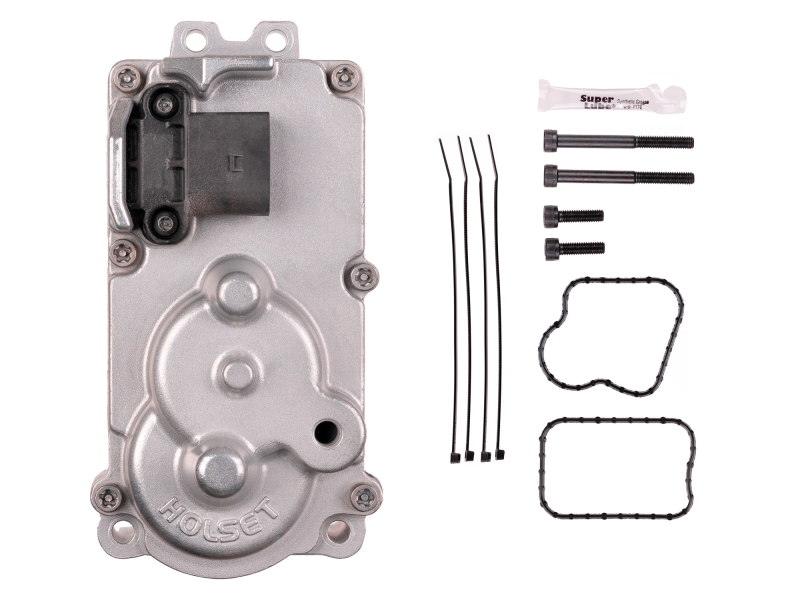
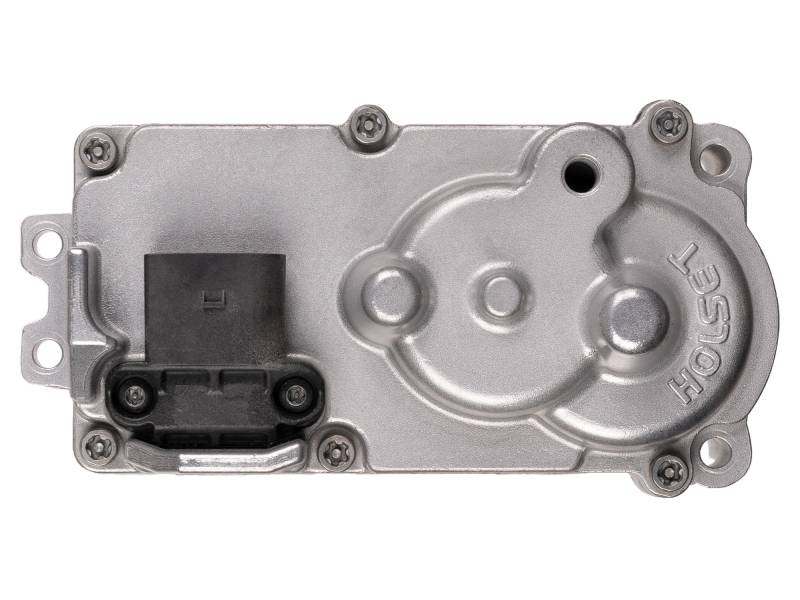
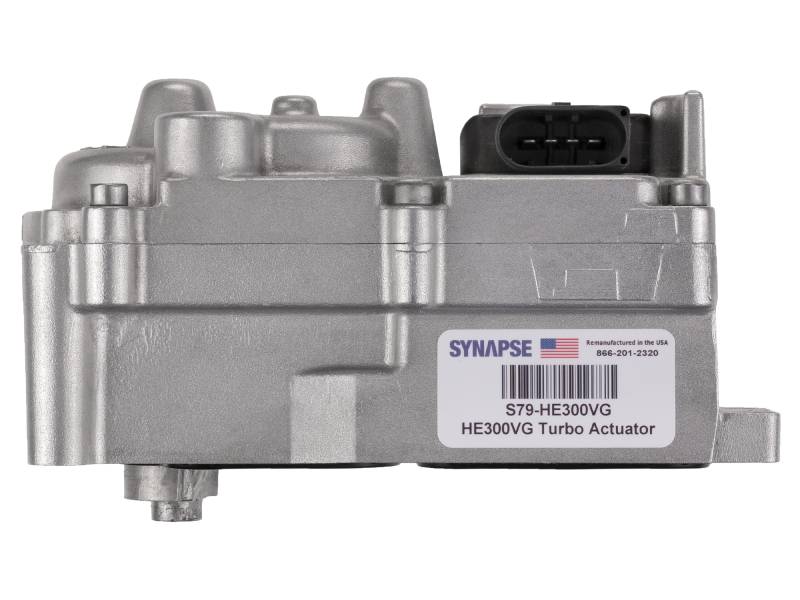
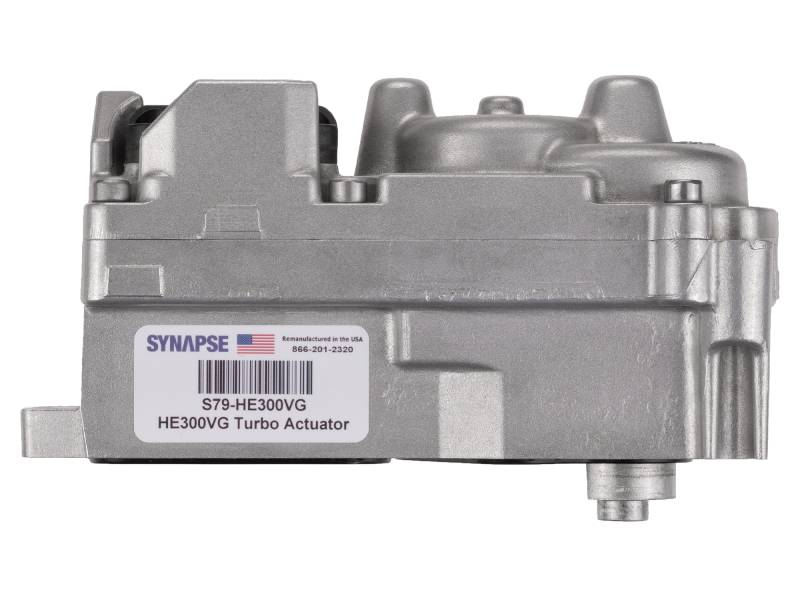
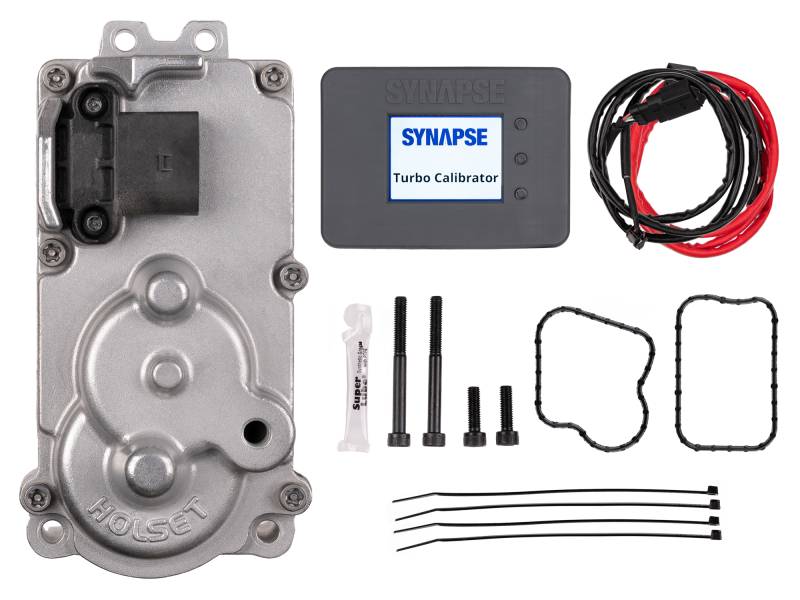
This fully remanufactured Holset HE300VG turbo actuator is built for 2013–2023 Ram 6.7L Cummins applications and select 6.7L ISB/ISL engine platforms, providing OE-level control of the variable-geometry turbocharger without requiring a full turbo replacement. The unit is completely rebuilt inside and out (electronics and geartrain), bench-calibrated, and supplied with an installation kit and gaskets so you can restore boost control and exhaust brake performance with a clean, bolt-on solution.
2013–2023 Ram 2500 / 3500 / 4500 / 5500 with 6.7L Cummins using the Holset HE300VG turbocharger.
Additional Cummins ISB/ISL 6.7L applications using HE300VG with the same actuator configuration (no coolant port; verify by part number and turbo tag before ordering).
Designed for trucks and chassis running the HE300VG VGT turbocharger found on 2013+ Ram 6.7L Cummins, not earlier HE351VE-equipped trucks.
Actuator features no coolant port (dry, 12V unit), so trucks with coolant-fed actuators require the correct matching version.
Always confirm by OE number on the original actuator or by VIN/turbo part number with NorCal Diesel Performance before purchase.
Complete mechanical and electronic reman
Internal gears, position sensors, circuit board, and motor are inspected, repaired or replaced as needed, then calibrated to deliver precise vane-position control and reliable exhaust brake response.
Direct OE-quality replacement
Interchangeable with OE 6382096 and numerous Cummins / Holset supersessions (see cross-reference) to match factory connectors, mounting pattern, and control logic.
Restores VGT and exhaust brake performance
Correctly positions the HE300VG vanes across their full travel range, resolving common issues like underboost, overboost, slow spool, surging, and weak or inoperative exhaust brake.
Bench-tested and pre-calibrated
Each unit is load-tested to confirm accurate feedback, smooth gear movement, and proper response before shipping, reducing install time and comebacks when paired with a proper turbo calibration procedure.
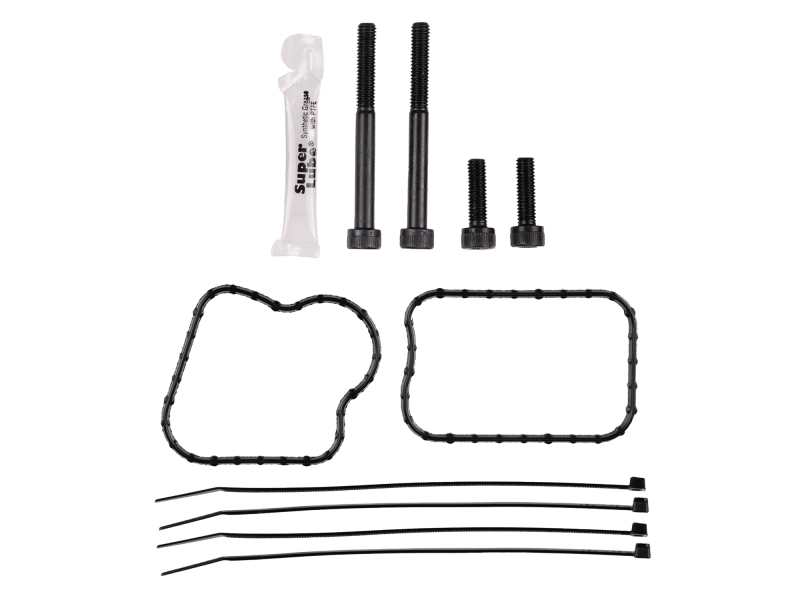
Includes install kit and gaskets
Supplied with the necessary gaskets and basic hardware so you can remove the failed actuator, clean the mounting surface, install the new unit, and calibrate it without hunting for additional small parts.
Type: Electronic VGT turbo actuator for Holset HE300VG.
Operating voltage: 12 V.
Additional note: “No coolant port” configuration.
Typical applications: 2013–2023 Ram 6.7L Cummins ISB plus select 6.7L ISB/ISL medium-duty.
Approximate weight: about 6 lb; typical package size around 5" x 10" x 12".
Common OE / aftermarket cross-reference numbers include (verify on your unit):
Cummins / Holset families such as 3778619, 3778623, 3784299, 3785180, 3788932, 4034090, 4034168, 4034309, 4034394, 4034395, 5452652, 5456326, 5456327, 5459882, 5494878, 6374774, 5601240, 6382096, 5641695, 5579127, and related “NX” reman labels like 4034090NX, 4034168NX.
Faulty HE300VG actuators and sticking VGT mechanisms often trigger one or more of these codes on 6.7L Cummins trucks:
P003A – Turbocharger boost control “A” position exceeded
Indicates a mismatch between commanded and actual vane position; often caused by a failing or out-of-calibration actuator, wiring issues, or sticky vanes.
P00AF – Turbocharger/Supercharger boost control “A” module performance
Typically, points to vanes not reaching the expected position due to a sticking actuator or turbo fouling.
P2563 – Turbocharger boost control position sensor performance
Suggests feedback from the actuator position sensor is out of range or erratic, frequently tied to internal actuator faults or poor connections.
P2262 – Turbocharger boost pressure not detected / mechanical malfunction
Often appears when the vanes are not moving correctly, and the engine does not build boost as commanded.
P0299 – Turbocharger underboost
Underboost condition from stuck-open vanes, limited travel, or an actuator that cannot drive the mechanism through its full range.
Depending on the failure, other VGT- and boost-related codes can appear, so a full scan-tool check and basic mechanical inspection (boost leaks, sensors, wiring) is recommended before condemning the actuator alone.
Owners typically see some combination of these symptoms:
Check engine light with limp or reduced-power mode
Truck may derate, limit boost, or disable exhaust brake, especially when P003A, P00AF, P2262, or P0299 are active.
Weak or inoperative exhaust brake
The exhaust brake may feel noticeably weaker or stop working altogether when the vanes cannot close properly.
Slow spool, low boost, or surging
Turbo response may feel lazy, with poor low-end torque, or the truck may surge/oscillate in boost as the actuator hunts for position.
Turbo is stuck in one position
When the actuator fails completely, the turbo can remain in a fixed geometry, resulting in very low power, abnormal EGTs, or noisy exhaust under load.
Intermittent loss of power or exhaust brake after warm-up
Some actuators fail more consistently once hot, causing intermittent drivability issues that can be hard to diagnose without monitoring vane position and commanded duty cycle.
When these symptoms occur with confirmed good wiring, power, ground, and no major boost leaks, replacing the actuator with a quality remanufactured unit is often the most direct fix.
Warranty coverage
Synapse remanufactured actuators are typically backed by a limited warranty (often 1 year) against defects in materials and workmanship of the actuator itself; coverage applies to internal mechanical and electronic failure, not to external causes.
External causes that can void or limit coverage commonly include contaminated or sticking turbo vanes, incorrect installation, damage from impact, water or coolant intrusion where not intended, poor power/ground supply, or modified wiring.
Core/return policy
Many reman actuators in this class are sold with a core charge that is refunded once a rebuildable original actuator is returned within the specified time window and passes inspection.
As with other electronic components, once installed and run, actuators are generally non-returnable except for warranty testing, so verifying fitment and ensuring a healthy turbocharger before installation is strongly recommended.
(Confirm exact warranty term and core conditions on the NorCal Diesel Performance product page or invoice, as policies can vary by batch and supplier.)
Not always. If the turbo’s mechanical components (vanes, unison ring, sector gear) move smoothly through their full travel and there is no excessive shaft play, a new or reman actuator alone can resolve many codes and drivability issues. However, if the turbo is sticking, heavily corroded, or has excessive wear, replacing only the actuator may lead to repeat failures or persistent codes.
Yes. The HE300VG actuator must be calibrated to the turbocharger after installation using a compatible scan tool or dedicated calibration device, so the actuator learns the correct vane travel limits and feedback values. Skipping calibration can leave you with P003A/P00AF codes and poor performance, even with a good actuator.
The truck may still run, but it often does so in limp mode, with low power, poor boost, higher EGTs, and a disabled exhaust brake, depending on the failure mode. Continued operation with incorrect vane control can stress the turbocharger and engine, so replacement and proper calibration should not be delayed once the actuator is confirmed faulty.
A proper diagnosis usually includes:
Reading codes and live data (commanded vs. actual vane position).
Inspecting wiring, connectors, power, and ground to the actuator.
Manually checking the turbo vane movement with the actuator removed to confirm the mechanism is free.
If vanes move freely but the actuator will not calibrate or track commanded position correctly, the actuator is the likely culprit; if the mechanism is stiff or seized, the turbocharger itself needs attention.
No. Earlier 6.7L Rams used the HE351VE turbo with a different style actuator and control strategy. This HE300VG actuator is intended for 2013–2023 Ram 6.7L Cummins and compatible 6.7L ISB/ISL applications; using it on the wrong turbo or model year will result in fitment and control issues.
 Total Reviews (0)
You must login to post a review.


Write the First Review!