Hello folks, and welcome to another Norcal Diesel Performance Tech Tip of the Day. Hope this helps folks figure out some of the more frustrating diagnostic concerns out there.
Today, we are talking about the Ford 6.7L Powerstroke Diesel. These trucks have had some fuel system issues as well as great upgrades, including the S&S DCR Pump. This tech tip comes to us today from one of the more recent concerns we ran through Orangevale Diesel recently.
A customer called and stated he changed his fuel filters, and after that, he had a low-pressure fuel light come on in the message center. I know what you all are thinking, it's the lower filter, and most of the time, you would be correct. In fact, that's what I also immediately thought. Cheap aftermarket filters you get from Autozone or O'Reilly's usually don't fit well and are sometimes missing seals or gaskets. We have seen many issues with filters sucking air through the lower filter or just not seating correctly. Changing the fuel filters with Quality OE or aftermarket filters usually fixes the concern. The OE fuel filter/water separator is a 10-micron filter. The secondary filter is 4 microns.
First things first, you should check the codes. This one had a P008A Low Fuel Pressure Too Low. Following the pinpoint test, it states you need to check mechanical fuel pressure (2011-2014 trucks), or if you have a 2015+, you should have a low-pressure fuel pressure sensor and be able to check it with the scan tool. We had a sensor, and it was reading 50-52 PSI idle. Fuel pressure specs are tough to find. Here is what we found.
Fuel Pressure Specs
| Condition | Low Pressure Spec (psi) |
|---|---|
| Minimum before warning | 52 |
| Normal operating range (11-16) | 53–73 |
| Typical idle (2017+) | 58 |
| Typical cruise/WOT (2017+) | 68 |
Next step, if you are low, which I would assume you are if you are reading this, is to check the lower filter. Remove the cup and inspect the seals for rolled o-rings, damage to the upper seat or debris in the filter. Sometimes pulling it, cleaning it out, and putting it back together can do the trick. In the event you need to replace the pump, you can find one from Alliant Power here. 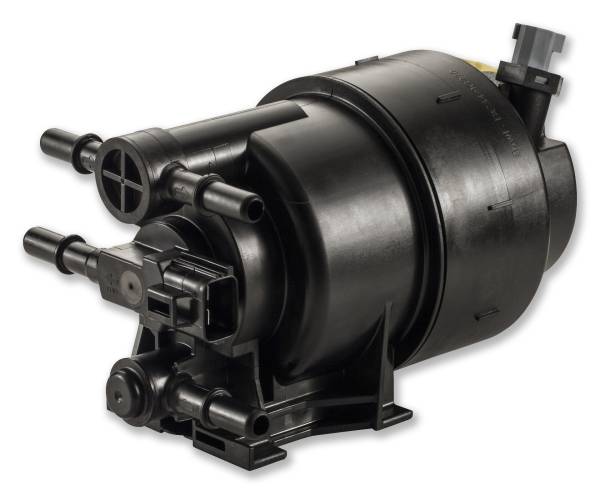
If fuel filters are okay and your pump seems good, you should check power and ground at the pump. Ensure you are getting proper voltage and a good ground to rule out an amperage load concern.
Oftentimes, the repair manual will tell you to install a known good part. Who has that lying around? And once installed, do you think you can return it? Nope. Not a chance. So here is where things can get hairy. I like to explain situations like a process. I like to be sure before replacing parts. Here is what we did.
First, if we have low pressure, we need to check the supply from the tank to ensure it's not aerated. Air from the sending unit will cause cavitation in the pump and result in low fuel pressure. A clear plastic hose will be your friend. These are 1/2" lines. We ran a clear plastic hose on the inlet and outlet of the pump to ensure no air was coming from the tank or being pumped to the high-pressure pump at the engine.
You can find Fleece Performance Sending units here. Made of metal, not plastic, and a perfect fix at a great price. 2011-2016 Ford 6.7L Fuel Supply Parts
What we found was that the pump was priming and holding a primer seal after shutting off, but was pumping aeriation to the engine on the outlet side of the pump. We pulled the lower filter and found a chunk of plastic from the filter that had broken off and gone through the low-pressure pump. We replaced the pump and repaired the aeriation concern. Fuel pressure improved to 52-54 psi, but after a while, the low-pressure warning lamp would return, and pressure would sit at 52 psi idle. Looking at the chart below, 52 is the threshold for the low warning indicator.
Next step, we went to the high-pressure system. Excessive return flow will also cause this concern. Return from the injectors and pump can be checked independently at the secondary fuel filter.
Looking at the fuel filter, there are typically 2 ports on the upper filter. One is supplied from the lift pump, and the other is fed to the high-pressure pump. The return from the injectors and feed back into the inlet hose of the filter, removing that tee fitting and putting the hose into a graduated cup will give you injector return flow. Spec per injector is 3 milliliters (ml) in 15 seconds while cranking or at idle. Do the math, and you shouldn't have more than 24 (ml). If they are good, you won't have anywhere near that amount of return. For reference, ours was 7 (ml).
If you need new injectors, buy the best ones available. Bosch OEM available at norcaldieselperformance.com. 2011-2014, 2015-2019, 2020-2022
Moving on, we checked the return flow from the Injection pump; in this case, the customer installed a DCR already. DCR return was well over excessive to the point where we needed a bigger cup. Knowing this was our issue, we installed a clear hose on the return side of the pump and checked for air. We saw bubbles, and that continued for 20-30 seconds until the air purged out. After which, the base fuel pressure jumped from 52 to 64 psi. Clean, clear fuel in, aeriated fuel out. It was the pump. But why? DCR pumps are flawless. Probably one of the best upgrades you can do on a Ford 6.7L.
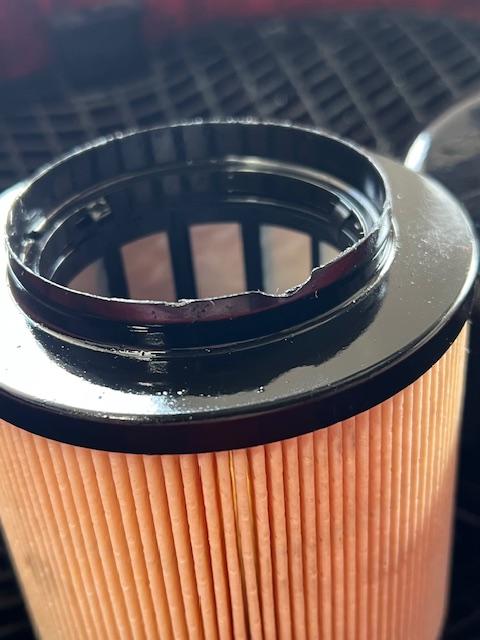
It was the filter's fault. Plastic from the lower filter broke off and somehow made it through the secondary filter and into the DCR pump regulator. We cleaned the FCA but the debris was deeper. Luckily, we were able to send the pump out to S&S, and for a small fee, they repaired it and returned it to us for installation.
So now what do we do? Fix it and use good parts. Motorcraft Filters, Bosch Filters, Racor, Baldwin, Donaldson. All Good Filters.
Install a DCR if you haven't already. You will thank us later. OE CP4 Pumps usually fail at 100k-150k miles.
Install the Fleece Secondary Fuel Filter with a spin-on Donaldson P555095 filter. Link
Use a Fuel Additive, XDP Diesel Power Plus, Justice Brothers Diesel Fuel Supplement.
Run Good fuel. #2 or B20. No Propel, HPR, or R95 unless you like repair bills.
Do your regular maintenance. It's amazing the cost savings in maintenance vs repairs.
Call us with any questions or if you would like to order something. Cause that's how we make our living. I am clearly no writer.
~Norcal Diesel Performance
1. What causes a low fuel pressure warning on a Ford 6.7L Powerstroke?
A low fuel pressure warning is most commonly caused by faulty or improperly installed fuel filters, air entering the fuel system (aeration), a failing low-pressure fuel pump, or excessive return flow from injectors or the high-pressure pump. Cheap aftermarket filters without proper seals are a frequent culprit.
2. What is the normal fuel pressure range for a 6.7 Powerstroke?
Typical low-pressure fuel specs for a Ford 6.7L Powerstroke are:
Minimum before warning: ~52 PSI
Normal operating range: 53–73 PSI
Idle (newer models): ~58 PSI
Cruising/WOT: ~68 PSI
If pressure drops near 52 PSI, the warning light may trigger.
3. Can bad fuel filters cause low fuel pressure issues?
Yes. Low-quality or incorrectly installed fuel filters are one of the most common causes.
Issues include:
Missing or damaged O-rings
Improper seating
Debris or plastic breaking off into the system
Using OE-quality filters like Motorcraft, Bosch, Racor, or Donaldson is strongly recommended.
4. How do you diagnose low fuel pressure on a 6.7 Powerstroke?
Diagnosis typically involves:
Scanning for codes (like P008A)
Checking fuel pressure readings
Inspecting both fuel filters and seals
Testing for air in the fuel system using clear lines
Measuring injector and pump return flow
Verifying proper voltage and ground to the pump
This step-by-step approach helps avoid unnecessary parts replacement.
5. What upgrades or fixes prevent fuel system problems on a 6.7 Powerstroke?
To reduce the risk of fuel system failure:
Use high-quality fuel filters (Motorcraft or equivalent)
Consider upgrading to a DCR pump
Install a better fuel sending unit (like Fleece)
Run approved diesel fuels (#2 or B20)
Use fuel additives for lubrication
Stay consistent with maintenance intervals