
One of the simplest ways to modify a truck is by giving it an aftermarket performance exhaust. A number of automakers like General Motors, Toyota, and Ford even produce factory accessories to facilitate enthusiasts who want to do this kind of upgrade.
If you own a pickup truck, you might be wondering if installing aftermarket exhaust parts can really take your vehicle's performance to the next level. And if it can, how does it work?
As you probably know, your truck's exhaust consists of several parts, including the exhaust manifold, the flex pipe, the resonator, the catalytic converter, and the muffler.
What we call a “performance exhaust” is typically the section that packs the catalytic converter and the muffler. For this reason, aftermarket exhausts are sometimes referred to as 'cat-back' exhausts. These accessories substitute the piping after the catalytic converter.
So, when it comes to this question: exhaust and horsepower: what's the relation? The answer is the exhaust determines how well the engine "breathes." The smoother it moves air in and out, the more horsepower it develops.
Your truck can be more potent when fitted with high-quality Cummins exhaust parts because they’re designed to achieve maximum, unrestricted gas flow and boost horsepower by helping the engine to "breathe" better.
During combustion, your engine's intake valves let air in while the exhaust valves release air out. If there's an excessive restriction in your exhaust system, it can cause exhaust air to redirect back in since back-pressure takes place in the piping. As a result, the available oxygen decreases, and so does horsepower.
A good performance exhaust doesn't only minimize back-pressure, but it also replaces exhaust air much faster, thus giving the combustion chamber the oxygen to generate greater horsepower at a faster rate.
It's important to note that a performance exhaust doesn't really help with engine output if your truck is naturally aspirated. Many tuning specialists have tried to do exhaust mods to naturally-aspirated machines, and the results weren't as satisfying as expected.
While your naturally aspirated truck may still get a performance boost, it won't be big, as you will only see a 3- to 4-horsepower increase at most. If improving sound quality is your main goal, though, you can achieve it—and take that small power increase as a plus. This modification is more rewarding when made to track-focused vehicles, as the gain usually appears in higher RPMs.
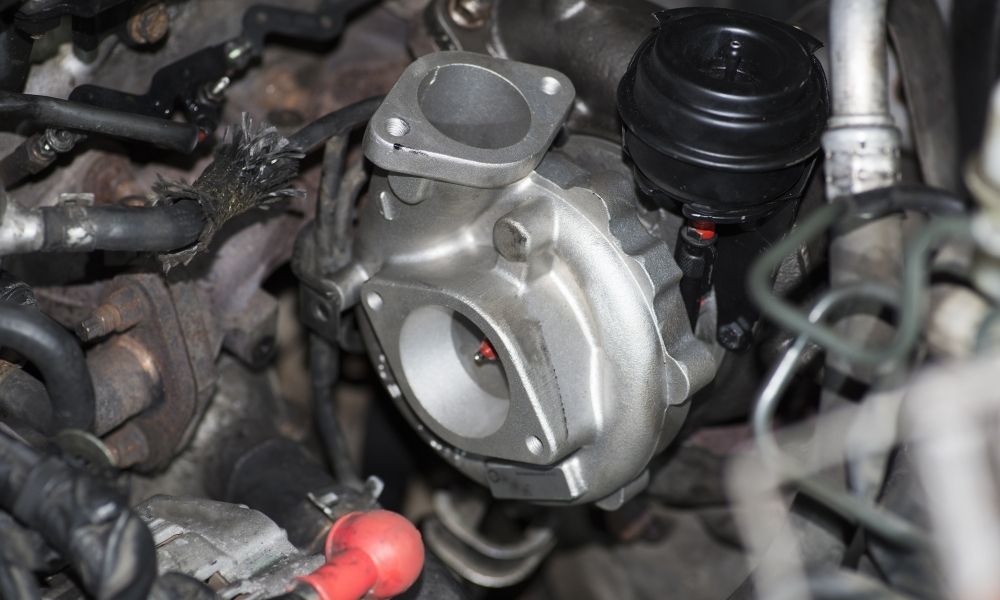
Meanwhile, if your truck is turbocharged, a performance exhaust will significantly elevate its performance. That's because the way the exhaust works fully supports forced-induction engines. Turbos can spool up much more quickly and unleash extra horsepower with reduced back-pressure.
You must login to post comments.